
Common Gearbox Models and Ranges
Listed below are the technical parameters and typical applications for several core types of gearboxes.
The “Four Series” (General Purpose)
• Represented by: R Series (Coaxial), F Series (Parallel Shaft), K Series (Right Angle), S Series (Helical-Worm).
• Reduction Ratio Range (i): R: 4.3 – 18,509; F: 28.2 – 273; K: 8.1 – 13,459; S: 5 – 100.
• Output Torque (Nm): R: 110 – 18,000; K: 155 – 50,000; S: 10 – 4,890.
• Typical Industries: R Series for metallurgy and chemical production lines; F Series for mining hoists and cement equipment; K Series for water conservancy gates and ship propulsion; S Series for food packaging and logistics sorting.
• Note: The “Four Series” is a collective term for these modular industrial gearboxes known for high versatility.
Precision Servo Planetary Gearbox
• Reduction Ratio Range (i): 3 – 2,000.
• Output Torque (Nm): Varies by model, typically features high torque density.
• Typical Industries: Industrial robot joints, CNC machine tools, semiconductor equipment, and AGV carts.
Harmonic Drive (Harmonic Reducer)
• Represented by: CSF, SHG series, etc.
• Reduction Ratio Range (i): 30 – 320.
• Output Torque (Nm): High torque output relative to its small volume.
• Typical Industries: Industrial robots, collaborative robots (cobots), and aerospace.
RV Reducer
• Represented by: N series, C series, etc.
• Reduction Ratio Range (i): 30 – 192.5.
• Output Torque (Nm): Extremely high (typically used for medium to heavy loads).
• Typical Industries: Industrial robot bases/waists, machine tool rotary tables, and radar systems.
General Purpose Cylindrical Gearbox
• Represented by: ZQ, ZD, ZL, ZS series.
• Reduction Ratio/Torque: Wide range depending on specific models.
• Typical Industries: Port cranes, mining crushers, belt conveyors, and other heavy industries.
Worm Gearbox
• Represented by: WPA, WPS, WPX series, etc.
• Reduction Ratio Range (i): 5 – 100.
• Output Torque (Nm): Medium; suitable for small to medium loads.
• Typical Industries: Conveyor belts, small lifts, and valve actuators where self-locking is required.
Cycloidal Pinwheel Reducer
• Represented by: B series, X series, etc.
• Reduction Ratio Range (i): 9 – 7,569.
• Output Torque (Nm): Medium to high; excellent shock resistance.
• Typical Industries: Lifting and transport, chemical agitation, and textile printing/dyeing equipment.
Micro Precision Gearbox
• Represented by: ZWBPD series, etc.
• Reduction Ratio Range (i): 5 – 1,500.
• Output Torque (Nm): Extremely small (measured in gf·cm).
• Typical Industries: Precision instruments, smart home devices, medical equipment, and micro-robotics.
Application and Equipment Integration
Gearboxes play a critical role in various types of machinery:
• Industrial Robot Joints: Precision control of every movement is essential; planetary, harmonic, or RV reducers are widely used.
• CNC Machine Tools and Automation: CNC, packaging, and printing equipment require high-precision synchronization, usually achieved through planetary or precision servo gearboxes.
• Material Handling and Lifting: Production lines and hoists require stable operation and overload protection. The Four Series, worm gearboxes, or cycloidal reducers are typically chosen.
• Construction Machinery and Vehicles: Equipment like excavators demands extreme torque and reliability; travel and swing reducers are the core components here.
• Wind Power and New Energy: Yaw and pitch systems require ultra-high reliability and long service lives. K Series or specialized planetary gearboxes are the standard.
• Metallurgy and Heavy Industry: Equipment like steel rolling mills must handle high impact and dusty environments. ZQ series hard-tooth gearboxes or K series gearboxes are commonly utilized.
• Medical and Precision Instruments: CT scanners and surgical robots have extremely high requirements for precision and noise. They predominantly utilize micro precision gearboxes or planetary gearboxes.
Key Integration Points and Calculations
The following are the critical steps and core formulas for matching a gearbox with a motor and load.
1. Motor Matching
• Torque Calculation: The rated output torque of the gearbox (T_{out}) must be greater than or equal to the rated motor torque multiplied by the reduction ratio. For example, if the motor torque is 5 Nm and the reduction ratio is 10, the required rated torque for the gearbox should be greater than 50 Nm.
• Speed Matching: Actual\ Output\ Speed = Motor\ Input\ Speed / Reduction\ Ratio.
• Precision Considerations: For high-precision requirements, focus on “backlash,” typically measured in arcminutes (arcmin).
• Specification Interface: Ensure the dimensions of the gearbox input shaft and the motor output shaft, as well as the flange interface, are compatible.
2. Load Verification
• Inertia Verification: Ensure the allowable inertia of the gearbox is greater than the converted load inertia to guarantee dynamic response during system start-stop and acceleration/deceleration.
• Radial/Axial Force Verification: Check if the actual forces are within the gearbox’s allowable range. If they exceed limits, select a larger specification or use external bearing support.
• Service Factor (Work Condition Coefficient): For applications involving frequent start-stops, forward/reverse rotation, or impact, the calculated torque must be multiplied by a service factor before comparing it to the gearbox’s rated torque to reserve a sufficient safety margin.
3. Installation and Testing
• Installation Requirements: Ensure the concentricity deviation of the input and output shafts is less than 0.02 mm, and tighten the screws diagonally according to the specified torque.
• Sealing and Lubrication: Confirm that oil seals, O-rings, and other sealing components are intact. Fill with the appropriate grade of lubricating oil or grease according to working conditions.
• Test Verification: After installation, it is recommended to perform forward and reverse rotation tests at low speed. Listen for the operating sound and check for abnormal noise or vibration.
Industry Matching Recommendations: The “Golden Partners”
3.1 Mobile Crushing Stations / Mining Equipment
• Matching Solution: K Series Helical-Bevel Gearbox or H/B High-Power Gearbox.
• Reasoning: Mining environments involve massive vibration. The right-angle structure of the K Series effectively balances radial loads, and the bevel gear section provides extreme strength, making it suitable for frequent impact loads.
3.2 Automated Logistics / Sorting Lines
• Matching Solution: F Series Parallel Shaft Gearbox or Right-Angle Planetary Gearbox.
• Reasoning: Logistics lines have compact space requirements. The ultra-slim design of the F Series allows for side mounting, saving aisle space, and is well-suited for the dynamic control of frequent start-stops.
3.3 Servo Positioning / Gantry Robots
• Matching Solution: Precision Planetary Gearbox (Backlash < 3 arcmin).
• Reasoning: Precision is the top priority. The multi-tooth engagement of the planetary structure ensures precise braking after high-speed displacement, preventing “shaking” feedback that could trigger motor alarms.
Detailed Gearbox Types and Recommendations
1.1 Helical Gearboxes (R/F/K/S Series) — The “Backbone” of General Industry
• Modular Design: Enables millions of combinations, making them extremely easy to replace.
• High Efficiency: Helical gear transmission efficiency is typically above 95%, significantly higher than worm gears.
• Durability: Gear surfaces are carburized and quenched, resulting in high hardness and a long service life.
• Sub-series Breakdown:
• R Series (Coaxial): Power input and output are on the same axis; the primary choice when longitudinal installation space is ample.
• F Series (Parallel Shaft): Flat structure; ideal for mounting on the side of conveyors to save lateral space.
• K Series (Bevel-Helical): Right-angle output with the strongest load-bearing capacity; ideal for high-torque transitions.
FAQ: Addressing Client Pain Points
Q1: Why is the model you recommend “one size larger” than what I originally used?
Targeted Answer: This is based on Total Cost of Ownership (TCO). While many gearboxes are cheaper initially, their Service Factor is often too low. Under overload conditions (such as uneven material sizes), shafts can break. Choosing a model “one size larger” extends the maintenance cycle from 1 year to 3–5 years, significantly reducing downtime losses.
Q2: There is a 2x price difference between helical and worm gearboxes. Which should I choose?
Targeted Answer: It depends on the annual operating hours.
• If operating more than 8 hours per day, choose Helical (R/K/F series). Although the initial cost is higher, the 95% efficiency (vs. 65–75% for worm gears) will save enough in electricity costs annually to offset the price difference.
• If for occasional movement (such as opening/closing a valve), a worm gearbox with self-locking capabilities offers the best cost-performance ratio.
• S Series (Helical-Worm): Combines the high efficiency of helical gears with the smooth operation of worm gears, offering excellent cost-performance.
1.2 Planetary Gearboxes — The Embodiment of Precision and Power
• Recommendation Reasons:
• Ultra-High Power Density: For the same volume, a planetary gearbox’s torque output is 2–3 times that of a standard gearbox.
• Low Backlash: Ensures extreme precision during positioning when paired with servo motors.
• Recommended Scenarios: Lithium battery module assembly, AGV drive wheels, and precision packaging machinery.
1.3 Cycloidal Pinwheel Reducers — The “Tough Guy” of Impact Resistance
• Recommendation Reasons:
• Multi-Tooth Engagement: Up to 30% of the teeth engage simultaneously, preventing tooth breakage even under instantaneous high-pressure impact.
• Long Service Life: Core transmission components are made of bearing steel, resulting in low rolling friction loss.
• Recommended Scenarios: Wastewater treatment agitation, mining feeders, and chemical reaction kettles.
II. Customer Pain Points and Expert Solutions
In the 2026 market environment, engineers often encounter three major “pitfalls” during selection:
Pain Point 1: Equipment has “strength but no stamina,” leaking oil or breaking shafts after a few days.
S Series (Helical-Worm): Combines the high efficiency of helical gears with the smooth operation of worm gears, offering excellent cost-performance.
1.2 Planetary Gearboxes — The Embodiment of Precision and Power
Recommendation Reasons:
Ultra-High Power Density:For the same volume, a planetary gearbox’s torque output is 2–3 times that of a standard gearbox.
Low Backlash:Ensures extreme precision during positioning when paired with servo motors.
Recommended Scenarios:** Lithium battery module assembly, AGV drive wheels, and precision packaging machinery.
1.3 Cycloidal Pinwheel Reducers — The “Tough Guy” of Impact Resistance
Recommendation Reasons: Multi-Tooth Engagement:Up to 30% of the teeth engage simultaneously, preventing tooth breakage even under instantaneous high-pressure impact.
Long Service Life:Core transmission components are made of bearing steel, resulting in low rolling friction loss.
Recommended Scenarios: Wastewater treatment agitation, mining feeders, and chemical reaction kettles.
II. Customer Pain Points and Expert Solutions
In the 2026 market environment, engineers often encounter three major “pitfalls” during selection:
Pain Point 1: Equipment has “strength but no stamina,” leaking oil or breaking shafts after a few days.
Diagnosis: Are you focusing only on motor kilowatts (kW) while ignoring the **Service Factor**?
- Formula:
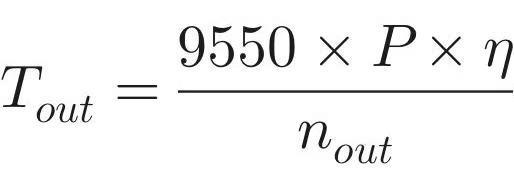
Detailed Solution:** The core of gearbox selection is **Torque (T), not power.
Strategy:If your equipment has frequent start-stops (more than 10 per hour) or impact loads (like a crusher), you must multiply the calculated torque by a safety factor of 1.5 – 2.0.
Recommended Model: For high impact, choose the HJ Series (Cycloidal); for constant loads, choose the R Series.
Pain Point 2: Precision equipment vibrates excessively, causing servo motor errors.Diagnosis: Is your Moment of Inertia matched?
Detailed Solution: A gearbox doesn’t just reduce speed; it isolates load inertia.
Strategy: Once load inertia is converted to the motor end, the ratio to motor inertia should be kept within 5:1 (or 3:1 for high dynamic response).
Recommended Model:Select a Precision Planetary Gearbox (e.g., PVE/PAE series).
Pain Point 3: Limited installation space prevents standard gearboxes from fitting.
Diagnosis: Have you considered right-angle output or integrated drives?
Detailed Solution: Many engineers default to linear layouts, resulting in bulky equipment.
Recommended Model:Choose the K Series (Bevel-Helical) or the **F Series (Parallel Shaft)with a hollow shaft output. These can be mounted directly onto the load shaft, eliminating the need for a coupling.
III. Equipment Matching Analysis
1. Belt Conveyors
Matched Type: F Series Parallel Shaft Helical Gearbox.
Model Example:F77 – F127.
Reasoning: Conveyors usually have limited lateral space. The F Series’ flat design fits snugly against the conveyor frame. Its high efficiency (>95%) significantly reduces electricity costs for long-term operation.
2. Heavy-Duty Agitators
Matched Type: Cycloidal Pinwheel Reducer or H/B Series High-Power Gearbox.
Model Example:BWED Series or H2-H4 High-Power Casing.
Reasoning: Agitating materials (chemical/sewage) creates uneven impact loads. The multi-tooth engagement of the cycloidal design makes tooth breakage nearly impossible. They are also equipped with reinforced bearings to handle large radial and axial forces.
3. Stackers and Cranes
Matched Type: K Series Bevel-Helical Gearbox.
Model Example:K87 – K157.
Reasoning: The right-angle structure fits the compact end-beam layout of lifting equipment. It provides high rigidity for smooth braking and the high starting torque required for lifting moments.
4. Industrial Robots and Precision Rotary Tables
Matched Type: RV Reducer or High-Precision Planetary Gearbox.
Model Example: RV-E Series / AD Series Planetary.
Reasoning: Rigidity determines trajectory accuracy. These units offer extremely low backlash (typically < 3 arcmin**) and can handle hundreds of start-stops per minute without losing precision.
5. Automatic Packaging Lines
Matched Type: R Series Small Helical or NMRV Series Aluminum Worm Gearbox.
Model Example:R37 / NMRV050-063.
Reasoning:Packaging loads are relatively light. The NMRV series is lightweight, cost-effective, and quiet—perfect for food or pharmaceutical environments.
IV. 2026 Maintenance & Care Guide
To ensure a design life of over 10 years, please follow this checklist:
4.1 Lubrication Management (The “Blood” of the Gearbox)
1. Initial Change:Replace the oil after the first 200–300 hours of operation to remove metal micro-powder from the break-in period.
2. Routine Change:In harsh, high-temperature, or humid environments, change every 2,500 hours; under general conditions, every 5,000 hours or once a year.
3. Oil Level Check: Inspect the oil sight glass weekly. Never operate with low or no oil.
4.2 Temperature and Vibration Monitoring
1. Temperature Limits: Oil temperature should not exceed 85°C, and the casing temperature should not exceed 100°C.
2. Abnormal Noise: If metal clashing sounds occur, stop immediately to check for gear pitting or bearing failure.
Expert Selection Tip:For outdoor mining, specify IP65 protection and low-temperature lubricant. Searching for specific terms like “High-torque crusher gearbox” or “Leaking-proof conveyor reducer” will yield more optimized results for your specific 2026 project.
4.3 Sealing and Oil Leakage Treatment
1. Breather Valve Cleaning: Ensure the breather cap on top of the gearbox is unobstructed. If blocked, the internal pressure will rise, causing oil seals to burst and leak.
2. Oil Seal Replacement: It is recommended to forcibly replace the output shaft oil seal every 2 years to prevent dust from entering the housing and wearing down the gears.
4.4 Fastener Inspection
• Gearboxes operating under heavy loads experience high-frequency micro-vibrations. Check the foundation bolts and motor connection bolts every quarter to prevent shaft breakage accidents caused by loosening.
Expert Group Suggestion:
If you are performing project selection for crushers, ball mills, automation lines, or robots, please directly provide your:
1. Motor Power (kW)
2. Required Output Speed (RPM)
3. Ambient Temperature and Installation Angle
We will provide you with a free selection plan including CAD drawings, 3D models, and a Total Cost of Ownership (TCO) analysis.
2026 Industrial Gearbox Lifecycle Maintenance Manual
I. Lubrication Management: The “Blood” of the Gearbox
Lubrication is the most critical link in gearbox maintenance. Statistics show that 80% of early gearbox damage is related to improper lubrication.
• 1. Break-in Oil Change (Initial Period):
The first oil change must be performed after the new machine has operated for 200 to 300 hours.
• In-depth Analysis: Gears undergo microscopic wear-in during initial operation, causing a buildup of metal debris and fine particles in the oil. If not discharged in time, these particles act as “abrasives,” rapidly wearing down gear surfaces and bearings.
• 2. Regular Oil Change Intervals:
• Harsh Conditions: In environments with high temperature, high humidity, or high dust (such as mine crushing sites), change the oil every 2,500 hours of operation.
• General Conditions: Change every 5,000 hours or at least once a year.
• 3. Oil Level and Quality Monitoring:
• Weekly: Observe the oil level window. An oil level that is too low will prevent the top gears from being lubricated, leading to burn-out; an oil level that is too high will cause poor heat dissipation and burst oil seals.
• Prohibition: Strictly forbid mixing different brands or grades of lubricating oil to prevent chemical additive reactions and failure.
II. Operating Status Monitoring: Prevention is Better than Cure
Capture signals before equipment failure through sensory checks and simple tools.
• 1. Temperature Monitoring:
• Use an infrared thermometer to monitor key parts of the gearbox. During normal operation, the internal oil temperature should not exceed 85°C, and the casing temperature should not exceed 100°C.
• Abnormal temperature spikes usually indicate excessive load, insufficient internal lubricant, or bearing wear.
• 2. Abnormal Noise and Vibration:
• Detection Points: Focus on listening to bearing positions and meshing points.
• Warning: If metal clashing sounds, sharp squeals, or strong vibrations occur, shut down immediately. This is usually a sign of cracked gears, collapsed bearings, or coupling misalignment.
III. Sealing and Ventilation: Maintaining “Internal and External Pressure Balance”
A gearbox is a relatively closed system, but it is by no means completely sealed.
• 1. Breather Valve (Vent Plug) Cleaning:
• A vent plug is usually installed at the top of the gearbox. As the internal temperature rises during operation, the air expands, and the breather valve is responsible for discharging the pressure.
• Key Point: Clean the vent plug once a month. If dust blocks the vent, excessive internal pressure will directly push through the shaft end oil seals, causing large-scale oil leakage.
• 2. Oil Leakage Inspection:
• Check for oil seepage at the output and input shafts. It is recommended to replace core oil seals every 2 years.
• In 2026 standard selections, it is recommended to opt for “labyrinth seals” or double-lip oil seals for dust-heavy environments like mines.
IV. Fasteners and Physical Connection Inspection
High-frequency vibration is the natural enemy of gearboxes operating under heavy or impact loads (such as crushing and agitation).
• 1. Foundation and Bolt Tightening:
• Inspect the connection bolts between the gearbox and the base every quarter. Loose bolts cause gearbox displacement, leading to shaft misalignment and eventually causing the motor or gearbox shaft to snap.
• 2. Couplings and Drive Belts:
• Check if the elastic elements of the coupling are aging. For belt-driven gearboxes, check belt tension to prevent heat generated by slipping from transferring to the gearbox bearings.
V. Long-term Shutdown and Storage Guide
If the equipment needs to be shut down for more than 3 months, please perform the following:
1. Fill Completely with Oil: Prevent internal corrosion of gears caused by moisture in the air (drain to standard level before restarting).
2. Grease Shaft Ends: Apply rust-preventive grease to the exposed surfaces of the output and input shafts.
3. Manual Barring: Manually rotate the gearbox several turns every month to prevent bearing rollers from remaining in one position for too long, which causes plastic deformation.
Conclusion
“Success is 30% selection and 70% maintenance.” In the industrial landscape of 2026, the precision of gearboxes continues to increase. By following this structured maintenance guide, you can convert expensive “emergency repair costs” into low-cost “preventative maintenance expenses,” significantly improving the profitability of your entire production line.
